(ECNS) --In the sunlit cotton fields of Shihezi City, Xinjiang Uyghur Autonomous Region, rows of vigorous cotton seedlings sway gently amid high-tech monitoring equipment. Utilizing smart agricultural systems, local farmers are boosting both the precision and quality of cotton production.
These cotton crops, further transformed through advanced processing into high-performance materials, are now finding notable success in international markets — representing not only products but advanced technology as well.
Smart agriculture drives quality and efficiency
"By applying intelligent agricultural management systems, one worker can oversee 200 mu to 300 mu (about 13.34 to 20 hectares) of cotton fields, compared with just 30 mu (2 hectares) under traditional methods," explained Ma Zhandong, General Manager of Xinjiang Tianshan Smart Agriculture Technology Co., Ltd. "Smart farming has significantly improved labor efficiency in cotton cultivation."
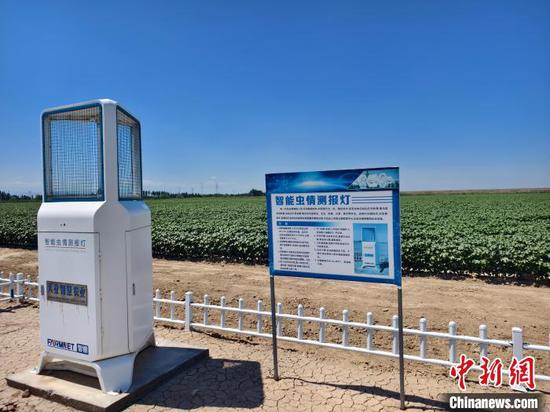
A smart pest monitoring lamp operates in a cotton field in Shihezi, northwest China’s Xinjiang Uyghur Autonomous Region, June 28, 2025. (Photo:China News Service/ Wang Jing)
The system employs a network of sensors that monitor real-time field conditions such as pest presence, groundwater levels, and weather data in real time. This technology converts traditional planting experience into digital models, enabling informed,data-driven decision-making.
"Farmers can now remotely control field operations using their smartphones," Ma explained. This not only streamlines irrigation and other processes but also enhances cotton quality and yield far beyond traditional methods.
Roughly 15 kilometers east of Shihezi, in Manas County of Changji Hui Autonomous Prefecture, Xinjiang cotton is being transformed into high-value technological materials.
From cotton fields to high-performance materials
One prominent example is vulcanized fiberboard, commonly known as "steel paper", made from refined cotton linters. Known for its remarkable strength and flexibility, steel paper is widely used in polishing ship hulls and automotive bodies. Due to its excellent insulation properties, it also plays a vital role in 5G base stations, electric vehicle batteries, and other cutting-edge technologies. With a fiber content as high as 99 percent, it is biodegradable and environmentally sustainable.
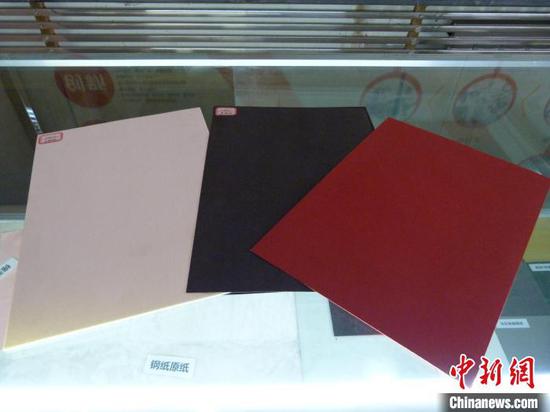
Yuan Yi Sci-Tech Co., Ltd. displays steel paper made from Xinjiang cotton in northwest China’s Xinjiang Uyghur Autonomous Region, June 28, 2025. (Photo: China News Service/Zhao Jingshu)
Yuan Yi Sci-Tech Co., Ltd., the sole producer of steel paper in northwest China, sources its raw cotton exclusively from Xinjiang. "Currently, our products hold about 45 percent of the domestic market," said General Manager Hu Yue. "Demand is strong both at home and abroad." The company anticipates revenues of up to 80 million yuan (approximately USD 11 million) by 2025.
The advanced processing of Xinjiang cotton into high-value materials exemplifies how agricultural byproducts can evolve into drivers of industrial upgrading and global competitiveness.
Exporting both products and technological innovation
According to Hu Yue, nearly half of Yuan Yi's steel paper production is exported to markets across Asia and Europe — including South Korea, Italy, Turkey, and India — with export sales accounting for 35 percent of total revenue.
It is not only Xinjiang's cotton-based products that are entering global markets but also its agricultural expertise.
Wang Shengyi, Director of the Xinjiang Tianshan Agricultural Research Institute, highlighted the institute's efforts to promote water-saving irrigation technologies developed in Shihezi to countries along the Belt and Road Initiative (BRI). "We aim to export a complete package of smart agricultural technology and equipment to enhance our presence in BRI nations," he noted.
Among these innovations is subsurface drip irrigation, a foundational tool in smart farming suitable for a wide range of crops, including cotton, corn, wheat, tomatoes, and chili peppers. Xinjiang Tianye (Group) Co., Ltd., the parent company of the institute, has already established 20 demonstration sites in 17 countries, with nearly 66,700 hectares of farmland now using the technology.
The success story of Xinjiang cotton reflects China's broader push to elevate its agricultural value chain — from traditional raw material to cutting-edge materials and globally competitive technological exports.
(By Evelyn)
最长春节假期收官:中外游客“双向奔赴”,出境游创4年峰值 澎湃新闻记者 唐莹莹 史上最长春节假期正式收官。多家在线旅游平台发布的报告显示,8-9天的假期让春节期间的出游时间和出游距离双双拉长。 春节前 三四线城市贡献增至近六成!龙年春节档票房创新高,也有公司被烫伤 春节档票房之争基本落下帷幕,龙年电影市场迎来开门红。 2月18日消息,根据国家电影局初步统计,2024年春节假期(2月10日至2月17日)全国电影票房为8 新华社首尔2月21日电 “观览时间已结束,请有序退场。”位于韩国龙仁爱宝乐园的熊猫世界里,工作人员引导着前来参观旅韩大熊猫“福宝”一家的游客。在韩国出生的大熊猫“福宝”计划今年4月初回国。依 中国发展网讯 踩高跷、 “醉关公”、吭秦腔……2月21日,在宕昌县城区街道、时代广场,当地举行了贺新春社火进城展演活动。来自两河口镇的社火队为当地群众献上精彩的演出。上午10时许,社火 本报讯 记者付朝欢报道 为贯彻落实《数字中国建设整体布局规划》工作部署,摸清数据资源底数,加快数据资源开发利用,更好发挥数据要素价值,国家数据局综合司、中央网信办秘书局、工业和信息化部办公厅、 中新经纬2月23日电 国家邮政局官方微信号23日称,近日,国家邮政局发出通知,要求全系统全行业提高思想认识,严格周密部署,强化责任落实,切实做好全国两会期间寄递渠道安全服务保障工作。 通知指出,各级邮政管理部门要强 。本文链接:Xinjiang cotton finds new path in global markets: advancing from raw material to high-tech exporthttp://www.sushuapos.com/show-5-60423-0.html
声明:本网站为非营利性网站,本网页内容由互联网博主自发贡献,不代表本站观点,本站不承担任何法律责任。天上不会到馅饼,请大家谨防诈骗!若有侵权等问题请及时与本网联系,我们将在第一时间删除处理。
上一篇: “两国务实合作帮助玻利维亚提升工业能力” ——访玻利维亚能源部能源规划与发展副部长韦拉斯克斯
下一篇: China shares new development opportunities with South Asian nations: Sri Lankan official